Sarga 116
तपस्विनाम् औत्सुक्यं राक्षसत्रासश्च (Ascetics’ Anxiety and the Fear of Rakshasas)
अयोध्याकाण्ड
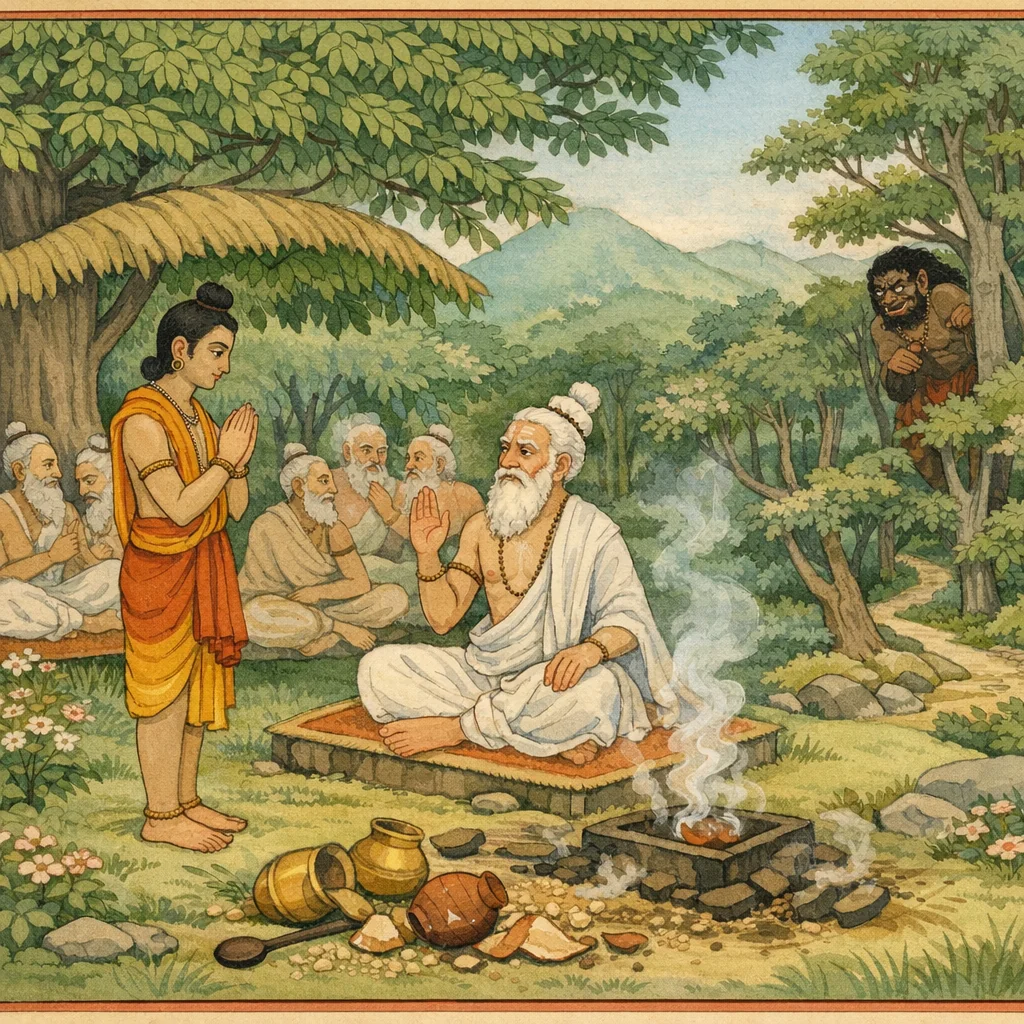
In Citrakūṭa’s tapas-grove, after Bharata’s departure, Rāma notices a marked shift among the resident ascetics: apprehension, furtive glances, and whispered consultations. Concerned that some fault in himself, Lakṣmaṇa, or Sītā may have disturbed the hermitage’s harmony, he respectfully questions the kulapati (chief ascetic). The aged ṛṣi rejects any suspicion against Sītā’s conduct and instead attributes the agitation to rākṣasa hostility intensified by Rāma’s presence. The ascetics describe a pattern of harassment: demons assume grotesque forms, assault and kill tapasvins, disrupt yajña preparations by scattering ladles and vessels, dousing sacred fire with water, and breaking ritual pots. They identify Khara—Rāvaṇa’s brother—dwelling near Janasthāna, notorious for uprooting ascetics and unlikely to tolerate Rāma. Concluding that continued residence endangers both the sages and the royal couple, the group resolves to abandon the ashram for an older refuge in a nearby fruit-rich forest and invites Rāma to accompany them. Rāma cannot restrain their departure by words alone; he escorts them for a distance, pays obeisance, receives their instruction with consent, and returns to his holy hermitage, steadfast even when it is left without them.
Shlokas
Verse 1
प्रतिप्रयाते भरते वसन्रामस्तपोवने।लक्षयामास सोद्वेगमथौत्सुक्यं तपस्विनाम्।।2.116.1।।
After Bharata had departed, Rāma—dwelling in the ascetics’ grove—noticed that the hermits were filled with anxiety and an urgent restlessness.
Verse 2
ये तत्र चित्रकूटस्य पुरस्तात्तापसाश्रमे।राममाश्रित्य निरतास्तानलक्षयदुत्सुकान्।।2.116.2।।
There, in the ascetics’ hermitage lying before Citrakūṭa, Rāma noticed those sages—who had taken refuge in him and meant to remain—now anxious and agitated.
Verse 3
नयनैर्ब्रुकुटीभिश्च रामं निर्दिश्य शङ्किताः।अन्योन्यमुपजल्पन्त श्शनैश्चक्रुर्मिथः कथाः।।2.116.3।।
The ascetics, casting wary looks at Rāma and knitting their brows, quietly conferred among themselves, exchanging words in secret.
Verse 4
तेषामौत्सुक्यमालक्ष्य रामस्त्वात्मनि शङ्कितः।कृताञ्जलिरुवाचेदमृषिं कुलपतिं ततः।।2.116.4।।
Seeing their anxious agitation, Rāma grew concerned within himself; then, with palms joined in reverence, he addressed the sage who was the hermitage-chief.
Verse 5
न कच्चिद्भगवन्किञ्चित्पूर्ववृत्तमिदं मयि।दृश्यते विकृतं येन विक्रियन्ते तपस्विनः।।2.116.5।।
“Revered sir, do you see any deviation in my former conduct—anything altered in me—by which these ascetics have become disturbed?”
Verse 6
प्रमादाच्चरितं कच्चित्किञ्चिन्नावरजस्य मे।लक्ष्मणस्यर्षिभिदृष्टं नानुरूपमिवात्मनः।।2.116.6।।
“Or has my younger brother Lakṣmaṇa, through inadvertence, done something that the sages have seen as unbecoming of him?”
Verse 7
कच्चिच्छुश्रूषमाणा व श्शुश्रूषणपरा मयि।प्रमदाऽभ्युचितां वृत्तिं सीता युक्तं न वर्तते।।2.116.7।।
“Or has Sītā—though devoted to serving me and attentive to serving you—failed to maintain, in proper measure, the conduct considered fitting for a woman?”
Verse 8
अथर्षिर्जरया वृद्धस्तपसा च जरां गतः।वेपमान इवोवाच रामं भूतदयापरम्।।2.116.8।।
Then an ascetic—aged by years and worn by austerity—spoke, as if trembling, to Rāma, who is deeply compassionate to all beings.
Verse 9
कुतः कल्याणसत्त्वायाः कल्याणाभिरतेस्तथा।चलनं तात वैदेह्यास्तपस्विषु विशेषतः।।2.116.9।।
“Dear child, how could there be any lapse on Vaidehī’s part—she whose nature is noble and who delights in what is auspicious—especially in her conduct toward ascetics?”
Verse 10
त्वन्निमित्तमिदं तावत्तापसान्प्रतिवर्तते।रक्षोभ्यस्तेन संविग्नाः कथयन्ति मिथः कथाः।।2.116.10।।
This fear has arisen among the ascetics because of you—due to the rākṣasas; alarmed by that, they speak among themselves about what may follow.
Verse 11
रावणावरजः कश्चित् खरो नामेह राक्षसः।उत्पाट्य तापसान्सर्वाञ्जनस्थाननिकेतनान्।।2.116.11।।धृष्टश्च जितकाशी च नृशंसः पुरुषादकः।अवलिप्तश्च पापश्च त्वां च तात न मृष्यते।।2.116.12।।
Here there is a rākṣasa named Khara, a younger brother of Rāvaṇa; he has driven out and uprooted all the ascetics who dwell in Janasthāna.
Verse 12
रावणावरजः कश्चित् खरो नामेह राक्षसः।उत्पाट्य तापसान्सर्वाञ्जनस्थाननिकेतनान्।।2.116.11।।धृष्टश्च जितकाशी च नृशंसः पुरुषादकः।अवलिप्तश्च पापश्च त्वां च तात न मृष्यते।।2.116.12।।
He is audacious and swaggering as though victorious; cruel, a man-eater, haughty and sinful—and, dear child, he will not tolerate even you.
Verse 13
त्वं यदाप्रभृति ह्यस्मिन्नाश्रमे तात वर्तसे।तदाप्रभृति रक्षांसि विप्रकुर्वन्ति तापसान्।।2.116.13।।
Dear child, ever since you began living in this hermitage, the rākṣasas have been troubling the ascetics.
Verse 14
दर्शयन्ति हि बीभत्सैः क्रूरैर्भीषणकैरपि।नानारूपैर्विरूपैश्च रूपैर्विकृतदर्शनैः।।2.116.14।।
They reveal themselves in many shapes—hideous, cruel, terrifying, deformed—forms that are repulsive to behold.
Verse 15
अप्रशस्तैशुचिभिस्सम्प्रयोज्य च तापसान्।प्रतिध्नन्त्यपरान्क्षिप्रमनार्याः पुरतः स्थिताः।।2.116.15।।
Standing right before them, those ignoble ones use forbidden and impure means against the ascetics—and then quickly strike down others as well.
Verse 16
तेषु तेष्वाश्रमस्थानेष्वबुद्धमवलीय च।रमन्ते तापसां स्तत्र नाशयन्तोऽल्पचेतसः।।2.116.16।।
Those small-minded ones hide unseen in this or that hermitage-site, and take delight there in destroying the ascetics.
Verse 17
अपक्षिपन्ति स्रुग्भाण्डानग्नीस्निञ्चन्ति वारिणा।कलशांश्च प्रमध्नन्ति हवने समुपस्थिते।।2.116.17।।
When the sacrifice is just about to begin, they fling away the ladles and the vessels of oblation, douse the sacred fire with water, and smash the water-pots as well.
Verse 18
तैर्दुरात्मभिरामृष्टानाश्रमान्प्रजिहासवः।गमनायान्यदेशस्य चोदयन्त्यृषयोऽद्य माम्।।2.116.18।।
Now the sages—wishing to abandon hermitages defiled by those wicked ones—are urging me to depart for another region.
Verse 19
तत्पुरा राम शारीरामुपहिंसां तपस्विषु।दर्शयन्ति हि दुष्टास्ते त्यक्ष्याम इममाश्रमम्।।2.116.19।।
O Rāma, those depraved beings even display bodily violence toward ascetics from the outset; therefore we have resolved to abandon this hermitage.
Verse 20
बहुमूलफलं चित्रमविदूरादितो वनम्।पुराणाश्रममेवाहं श्रयिष्ये सगणः पुनः।।2.116.20।।
Not far from here is a lovely forest rich in roots and fruits; there I shall again take refuge in an ancient hermitage, together with my companions.
Verse 21
खरस्त्वय्यपि चायुक्तं पुरा तात प्रवर्तते।सहास्माभिरितो गच्छ यदि बुद्धिः प्रवर्तते।।2.116.21।।
Dear child, Khara behaves improperly even toward you, as he has from before. If you judge it right, then come away from here together with us.
Verse 22
सकलत्रस्य सन्देहो नित्यं यत्तस्य राघव।समर्थस्यापि हि सतो वासो दुःखमिहाद्य ते।।2.116.22।।
O Rāghava, for one who lives here with his wife, anxiety is constant; even for you—though fully capable—dwelling here now is fraught with hardship and peril.
Verse 23
इत्युक्तवन्तं स्तंराम राजपुत्रस्तपस्विनम्।न शशाकोत्तरैर्वाक्यैरवरोद्धुं समुत्सुकम्।।2.116.23।।
Thus speaking, that ascetic was eager to depart; and Prince Rāma could not restrain him by words of reply.
Verse 24
अभिनन्द्य समापृच्छ्य समाधाय च राघवम्।स जगामाश्रमं त्यक्त्वा कुलैः कुलपतिस्सह।।2.116.24।।
Having greeted Rāghava, taken leave of him, and settled the matter with him, the chief of the group departed, abandoning the hermitage together with his community.
Verse 25
रामः संसाद्य ऋषिगणमनुगमनाद्देशात्तस्मात्कुलपतिमभिवाद्य ऋषिम्।सम्यक्प्रीतैस्तैरनुमत उपदिष्टार्थः पुण्यं वासाय स्वनिलयमुपसम्पेदे।।2.116.25।।
Rāma walked with the band of sages for some distance and then, bidding them farewell, bowed to that r̥ṣi—their leader. Approved by those well-pleased sages and having understood their counsel, he returned to his own holy dwelling to reside.
Verse 26
आश्रममृषिविरहितं प्रभुः क्षणमपिन जहौ स राघवः।राघवं हि सततमनुगता स्तापसाश्चार्षचरित धृतगुणाः।।2.116.26।।
That lord, Rāghava, did not abandon the hermitage—now bereft of sages—even for a moment; and the ascetics, steadfast in virtues and faithful to the sages’ tradition, continually accompanied Rāghava.
Frequently Asked Questions
The dilemma is whether Rāma’s continued residence—though personally dharmic—indirectly endangers vulnerable ascetics by attracting rākṣasa aggression. The action pivot is the ascetics’ decision to relocate and their invitation to Rāma to leave with them, framing security as a communal ethical responsibility.
The dialogue teaches that dharma is relational and context-sensitive: personal virtue must be evaluated alongside its effects on dependents and host communities. It also underscores ritual order (yajña) as a civilizational good whose disruption signals moral disorder requiring protective response.
Citrakūṭa and its tapas-āśrama serve as the immediate setting, while Janasthāna is introduced as a nearby rākṣasa-dominated zone associated with Khara. Culturally, the sarga foregrounds yajña infrastructure—agni, srug-bhāṇḍa, and kalaśa—as key markers of hermitage life targeted by hostile forces.