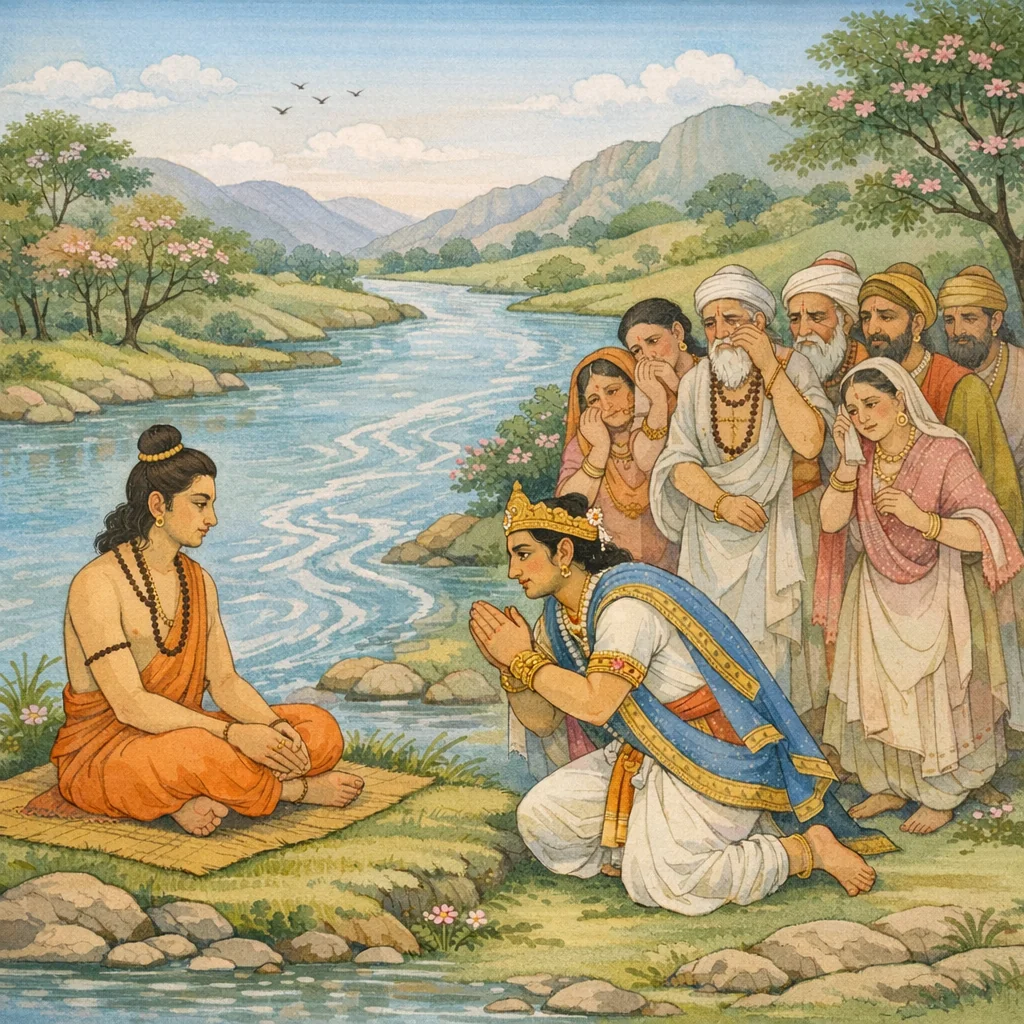
Sarga 106
भरतवाक्यं—रामस्य पुनरायोध्यागमननिषेधः (Bharata’s Plea and Rama’s Refusal to Return)
अयोध्याकाण्ड
On the bank of the Mandākinī, after Rāma’s meaningful statement, Bharata replies with a sustained, dharma-argumentative appeal. He praises Rāma’s equanimity and consultative habit, confesses Kaikeyī’s wrongdoing done “for his sake,” and explains his restraint from punishing her due to dharma-bonds. Bharata then frames a moral dilemma: how can one born of noble Daśaratha knowingly commit an adharma act; yet he also invokes the proverb that the dying become deluded, suggesting Daśaratha’s lapse arose from anger, delusion, or recklessness. He urges Rāma to “set right” the father’s transgression, defining true sonship as correcting paternal wrongs rather than endorsing them. Bharata expands the stakes to the whole polity—mother, kin, friends, and city/countryside subjects—and argues that enthronement is the primary kṣatriya-duty enabling protection of prajā. He contrasts forest austerities (jaṭā, araṇya) with governance, questions uncertain future-oriented piety over immediate royal obligation, and requests consecration on the spot by priests and elders. The chapter ends with communal endorsement of Bharata’s words, but Rāma remains fixed in Daśaratha’s command and refuses to return, leaving onlookers simultaneously grieved and admiring of his steadfast vow.
Shlokas
Verse 1
एवमुक्त्वा तु विरते रामे वचनमर्थवत्।ततो मन्दाकिनीतीरे रामं प्रकृतिवत्सलम्।।।।उवाच भरत श्चित्रं धार्मिको धार्मिकं वचः।
When Rama had finished speaking those meaningful words and fell silent, then on the bank of the Mandākinī, Bharata—the righteous one—addressed Rama, who was affectionate by nature, with a lucid reply grounded in dharma.
Verse 2
को हि स्यादीदृशो लोके यादृश स्त्वमरिन्दमः।।।।न त्वां प्रव्यथयेद्दुःखं प्रीतिर्वा नप्रहर्षयेत्।सम्मतश्चासि वृद्धानां तांश्च पृच्छसि संशयान्।।।।
O subduer of enemies, who in this world is like you? Neither sorrow disturbs you nor joy intoxicates you. You are esteemed by the elders, and when doubts arise you ask them for counsel.
Verse 3
को हि स्यादीदृशो लोके यादृश स्त्वमरिन्दम।।2.106.2।।न त्वां प्रव्यथयेद्दुःखं प्रीतिर्वा नप्रहर्षयेत्।सम्मतश्चासि वृद्धानां तांश्च पृच्छसि संशयान्।।2.106.3।।
Sorrow does not shake you, nor does pleasure make you exult. You are beloved of the elders, and when doubts arise you seek their counsel.
Verse 4
यथा मृत स्तथा जीवन्यथाऽसति तथा सति।यस्यैष बुद्धिलाभ स्स्यात्परितप्येत केन सः।।।।
To one who has gained such understanding, living and dying are the same; so too vice and virtue are met with equal mind—by what, then, could he be tormented?
Verse 5
परावरज्ञो यश्च स्याद् यथा त्वं मनुजाधिप।स एव व्यसनं प्राप्य न विषीदितुमर्हति।।।।
O lord of men, one who knows what is higher and lower—who sees the past and the future as you do—should not, even when struck by calamity, sink into grief.
Verse 6
अमरोपमसत्त्व स्त्वं महात्मा सत्यसङ्गरः।सर्वज्ञ स्सर्वदर्शी च बुद्धिमांश्चासि राघव।।।।
Rāghava, you are great-souled, with a nature like that of the immortals; you are steadfast in truth, all-knowing, all-seeing, and endowed with discernment.
Verse 7
न त्वामेवं गुणैर्युक्तं प्रभवाभवकोविदम्।अविषह्यतमं दुःखमासादयितुमर्हति।।।।
It is not fitting that you—endowed with such virtues and skilled in understanding rise and fall, life and death—should be brought to the most unbearable sorrow.
Verse 8
प्रोषिते मयि यत्पापं मात्रा मत्कारणात्कृतम्।क्षुद्रया तदनिष्टं मे प्रसीदतु भवान्मम।।।।
While I was away, the sin my mother committed for my sake—meanly and against my own wish—may you, I beg, graciously forgive as far as I am concerned.
Verse 9
धर्मबन्धेन बद्धोऽस्मि तेनेमां नेह मातरम्।हन्मितीव्रेण दण्डेन दण्डार्हां पापकारिणीम्।।।।
I am bound by the bond of dharma; therefore I do not strike down my mother here, though she has committed sin and deserves severe punishment.
Verse 10
कथं दशरथा ज्जात श्शुद्धाभिजनकर्मणः।जानन् धर्ममधर्मिष्ठं कुर्यां कर्म जुगुप्सितम्।।।।
How could I—born of Daśaratha, a man of noble lineage and righteous deeds—while knowing dharma, commit an act so reprehensible and so contrary to righteousness?
Verse 11
गुरुः क्रियावान्वृद्धश्च राजा प्रेतः पितेतिच।तातं न परिगर्हेयं दैवतं चेति संसदि।।।।
He was my guru, devoted to sacred duties, aged, a king—and now departed; he was my father. Therefore, in this assembly I cannot reproach my sire, who is to me as a deity.
Verse 12
को हि धर्मार्थयोर्हीनमीदृशं कर्म किल्बिषम्।स्त्रियाः प्रियं चिकीर्षु स्सन्कुर्याद्धर्मज्ञ धर्मवित्।।।।
O Rama—knower of dharma—who, being wise in righteousness, would commit such a sinful act, bereft of dharma and artha, merely to please a woman?
Verse 13
अन्तकाले हि भूतानि मुह्यन्तीति पुरा श्रुतिः।राज्ञैवं कुर्वता लोके प्रत्यक्षं सा श्रुतिः कृता।।।।
There is an old saying that at the time of death living beings become bewildered; by acting in this way, the king has made that saying visibly true in this world.
Verse 14
साध्वर्थमभिसन्धाय क्रोधान्मोहाच्च साहसात्।तातस्य यदतिक्रान्तं प्रत्याहरतु तद्भवान्।।।।
Reflecting well on what is truly right, you should undo whatever transgression of our father occurred through anger, delusion, or reckless impulse.
Verse 15
पितुर्हि समतिक्रान्तं पुत्रो यस्साधु मन्यते।तदपत्यं मतं लोके विपरीतमतोऽन्यथा।।।।
The son who regards his father’s wrongdoing as ‘right’ is not considered a true son in the world; otherwise, he becomes the very opposite of what a son should be.
Verse 16
तदपत्यं भवानस्तु मा भवान् दुष्कृतं पितुः।अभिपत्ता कृतं कर्म लोके धीरविगर्हितम्।।।।
Be that true son; do not become one who endorses the wrongful deed our father committed—an act censured in the world by the wise.
Verse 17
कैकेयीं मां च तातं च सुहृदो बान्धवांश्च नः।पौरजानपदान्सर्वांस्त्रातु सर्वमिदं भवान्।।।।
You must protect all this—Kaikeyī, me, our father, our friends and kinsmen, and all the citizens and countryfolk—indeed, the whole realm.
Verse 18
क्व चारण्यं क्वच क्षात्रं क्व जटाः क्व च पालनम्।ईदृशं व्याहतं कर्म न भवान्कर्तुमर्हति।।।।
What has the forest to do with a kṣatriya’s duty? What have matted locks to do with ruling and protection? You ought not to undertake an action so self-contradictory and disruptive.
Verse 19
एष हि प्रथमो धर्मः क्षत्रियस्याभिषेचनम्।येन शक्यं महाप्राज्ञ प्रजानां परिपालनम्।।।।
O great-souled wise one, the foremost duty of a kṣatriya is consecration as king; by that (royal investiture) the protection and governance of the subjects becomes possible.
Verse 20
कश्च प्रत्यक्षमुत्सृज्य संशयस्थ मलक्षणम्।आयतिस्थं चरे द्धर्मं क्षत्रबन्दुरनिश्चितम्।।।।
And who, being a kṣatriya, would abandon the evident, immediate duty and instead pursue an uncertain “piety” that is doubtful and ill-omened, whose results lie in a distant future?
Verse 21
अथ क्लेशज मेव त्वं धर्मं चरितु मिच्छसि।धर्मेण चतुरो वर्णान्पालयन् क्लेश माप्नुहि।।।।
If you truly wish to practice a dharma that is won through hardship, then accept the hardship of ruling—protect the four social orders righteously and bear that toil.
Verse 22
चतुर्णामाश्रमाणां हि गार्हस्थ्यं श्रेष्ठमुत्तमम्।आहुर्धर्मज्ञ धर्मज्ञास्तं कथं त्यक्तु मर्हसि।।।।
Among the four āśramas, the knowers of dharma declare the householder’s life to be the best and highest. O knower of dharma, how can you be fit to abandon it?
Verse 23
श्रुतेन बालः स्थानेन जन्मना भवतो ह्यहम्।स कथं पालयिष्यामि भूमिं भवति तिष्ठति।।।।
In learning, in status, and even by birth I am lesser than you. How could someone like me govern the earth while you are still here?
Verse 24
हीनबुद्धिगुणो बालो हीनः स्थानेन चाप्यहम्।भवता च विनाभूतो न वर्तयितुमुत्सुहे।।।।
I am a child, lacking in discernment and virtues, and inferior even in rank. Separated from you, I do not have the will even to continue living.
Verse 25
इदं निखिल मव्यग्रं राज्यं पित्र्यमकण्टकम्।अनुशाधि स्वधर्मेण धर्मज्ञ सहबान्धवैः।।।।
O knower of dharma, govern—according to your own rightful duty—this entire ancestral kingdom, untroubled and free of obstacles, together with all our kinsmen.
Verse 26
इहैव त्वाऽभिषिञ्चन्तु सर्वाः प्रकृतय स्सह।ऋत्विज स्सवसिष्ठाश्च मन्त्रविन्मन्त्रकोविदाः।।।।
Let all the constituents of the realm together, and the priests—along with Vasiṣṭha—those who know the mantras and are skilled in sacred recitation, consecrate you here itself.
Verse 27
अभिषिक्तस्त्वमस्माभिरयोध्यां पालने व्रज।विजित्य तरसा लोकान्मरुद्भिरिव वासवः।।।।
Once consecrated by us, return to Ayodhyā to govern—like Vāsava (Indra) who, having conquered the worlds with force, went back accompanied by the Maruts.
Verse 28
ऋणानि त्रीण्यपाकुर्वन्दुर्हृदस्साधु निर्दहन्।सुहृदस्तर्पयन्कामैस्त्वमेवात्रानुशाधि माम्।।।।
Having fully discharged the three debts (to gods, ancestors, and seers), thoroughly subduing your foes and satisfying your well-wishers with what they desire—you alone here in Ayodhya have the right to command me.
Verse 29
अद्याऽर्य मुदिता स्सन्तु सुहृदस्तेऽभिषेचने।अद्य भीताः पलायन्तां दुर्हृदस्ते दिशो दश।।।।
O noble one, let your well-wishers rejoice today at your consecration; and let your enemies, terrified, flee today in all the ten directions.
Verse 30
आक्रोशं मम मातुश्च प्रमृज्य पुरुषर्षभ।अद्य तत्र भवन्तं च पितरं रक्ष किल्बिषात्।।।।
O best of men, wipe away the reproach that has fallen on my mother; and now, protect our revered father there from sin.
Verse 31
शिरसा त्वाऽभियाचेऽहं कुरुष्व करुणां मयि।बान्धवेषु च सर्वेषु भूतेष्विव महेश्वरः।।।।
With my head bowed, I beg you: show compassion to me and to all our kin, as Maheśvara shows compassion to all living beings.
Verse 32
अथैतत्पृष्ठतः कृत्वा वनमेव भवानितः।गमिष्यति गमिष्यामि भवता सार्धमप्यहम्।।।।
But if you set these entreaties behind you and depart from here to the forest, then I too will go—together with you.
Verse 33
तथाहि रामो भरतेन ताम्यता प्रसाद्यमानश्शिरसा महीपतिः।नचैव चक्रे गमनाय सत्त्ववान्मतिं पितुस्तद्वचने प्रतिष्ठितः।।।।
Though Bharata—anguished and with bowed head—kept pleading, Rama, the virtuous lord of the earth, did not form any resolve to return; he stood firmly established in his father’s word.
Verse 34
तदद्भुतं स्थैर्यमवेक्ष्य राघवे समं जनो हर्षमवाप दुःखितः।न यात्ययोध्यामिति दुःखितोऽभवत् स्थिरप्रतिज्ञत्वमवेक्ष्य हर्षितः।।।।
Seeing that wondrous steadfastness in Rāghava, the people felt grief and joy at once: grief that he would not go to Ayodhya, and joy on seeing his unshakable fidelity to his vow.
Verse 35
तमृत्विजो नैगमयूथवल्लभास्तदा विसंज्ञाश्रुकलाश्च मातरः।तथा ब्रुवाणं भरतं प्रतुष्टुवुः प्रणम्य रामं च ययाचिरे सह।।।।
Then the priests, the leaders of the guilds, and the mothers—faint with grief and their tears spent—praised Bharata as he spoke thus; and together, bowing to Rama, they too implored him.
Frequently Asked Questions
Bharata confronts the tension between obeying a father’s flawed decision and restoring dharma through corrective action: he urges Rama to rectify Daśaratha’s transgression by accepting consecration and ruling, while Rama holds that fidelity to the father’s word requires continuing exile.
The dialogue models dharma as multi-layered—personal vows, filial duty, and rajadharma toward subjects can conflict; the sarga teaches that ethical reasoning must account for public responsibility and lineage ideals, yet also recognizes the exemplary power of unwavering truthfulness.
The Mandākinī riverbank functions as a liminal political space where courtly enthronement logic is re-argued in the forest; culturally, the sarga foregrounds abhiṣeka (royal consecration), sabhā norms of reproach and praise, and the householder ideal (gārhasthya) as a normative social anchor.