Sarga 104
भरतस्य प्रार्थना—रामस्य धर्मोपदेशः (Bharata’s Petition and Rama’s Dharma-Reasoning)
अयोध्याकाण्ड
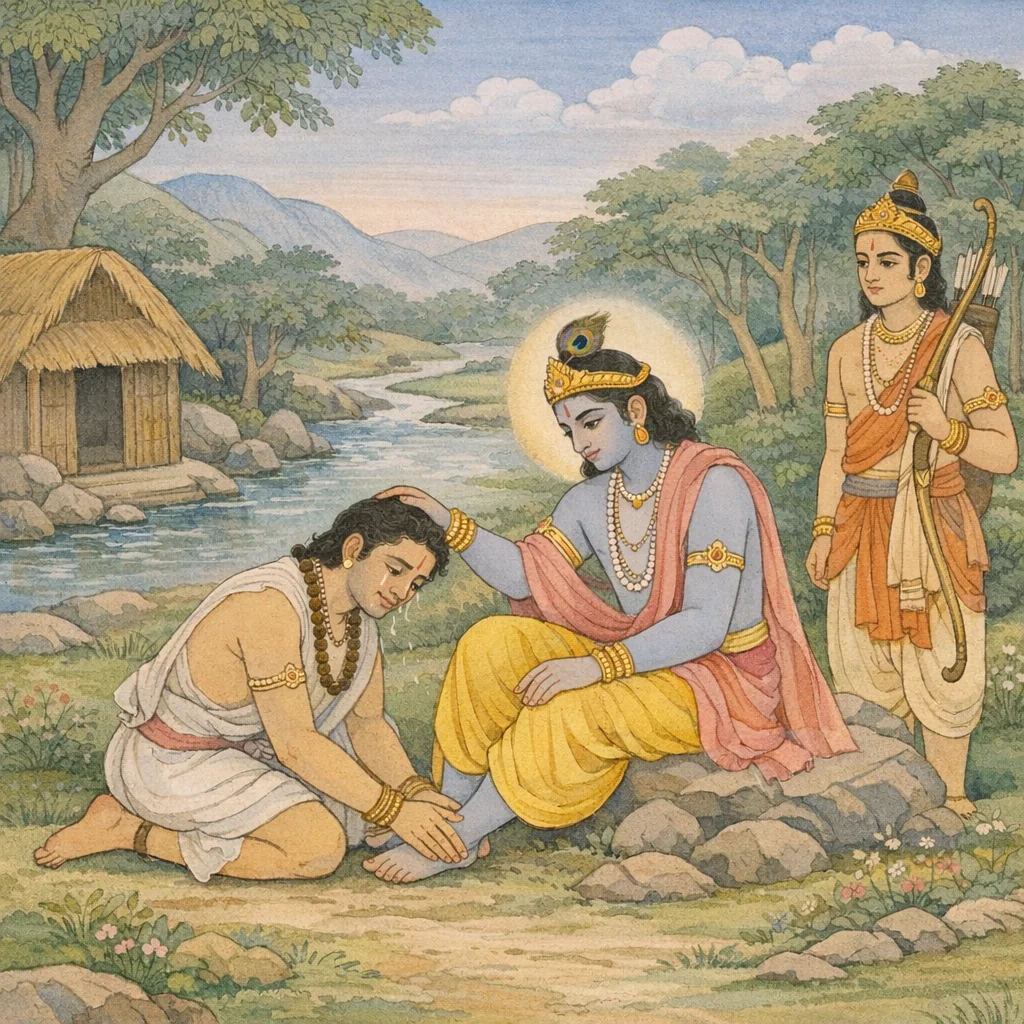
This sarga is a tightly structured dialogue on succession, culpability, and obedience. After Rama consoles Bharata (with Lakshmana present), Rama questions why Bharata has arrived in ascetic garb. Bharata reports Dasharatha’s death following the ‘impossible act’ of banishing Rama, condemns Kaikeyi’s instigation, and urges Rama’s immediate coronation to satisfy widowed queens and the subjects. Bharata frames the request via primogeniture, public consent, and ministerial support, bowing and grasping Rama’s feet in formal submission. Rama responds by affirming Bharata’s nobility, denying any fault in him, and cautioning against childish reproach of one’s mother; he cites śāstric latitude of elders toward wives and sons, and insists that the parental command is binding. Rama articulates the ‘division’ made publicly by Dasharatha—Bharata to rule Ayodhya, Rama to dwell in Dandaka for fourteen years—treating the father’s proclamation as pramāṇa (authoritative guide) and preserving the overlordship of dharma over personal ambition.
Shlokas
Verse 1
तं तु राम स्समाश्वास्य भ्रातरं गुरवत्सलम्।लक्ष्मणेन सह भ्रात्रा प्रष्टुं समुपचक्रमे।।।।
After consoling that brother—Bharata, devoted to elders—Rāma, together with Lakṣmaṇa, began to question him.
Verse 2
किमेतदिच्छेयमहं श्रोतुं प्रव्याहृतं त्वया।यस्मात्त्वमागतो देशमिमं चीरजटाजिनः।।।।
I wish to hear what this is that you have spoken—what reason brought you to this region, clad in bark-robes, with matted hair and antelope-skin.
Verse 3
यन्निमित्तमिमं देशं कृष्णाजिनजटाधरः।हित्वा राज्यं प्रविष्टस्त्वं तत्सर्वं वक्तुमर्हसि।।।।
For what reason have you entered this region—wearing black antelope-skin and matted hair—after abandoning the kingdom? You ought to tell me all of it.
Verse 4
इत्युक्तः कैकयीपुत्रः काकुत्स्थेन महात्मना।प्रगृह्य बलवद्भूयः प्राञ्जलिर्वाक्यमब्रवीत्।।।।
Thus addressed by the great-souled Kakutstha (Rama), Kaikeyī’s son (Bharata), folding his hands in reverence and gathering himself firmly, spoke these words.
Verse 5
आर्यं तातः परित्यज्य कृत्वा कर्म सुदुष्करम्।गत: स्वर्ग महाबाहुः पुत्रशोकाभिपीडितः।।।।
O noble one! Our mighty-armed father, having abandoned you—after doing the terribly hard deed—tormented by grief for his son, has gone to heaven.
Verse 6
स्त्रिया नियुक्तः कैकेय्या मम मात्रा परन्तप।चकार सा महत्पापमिदमात्मयशोहरम्।।।।
O Rāma, scorcher of enemies—my mother Kaikeyī, provoked by a woman, has committed this great sin, one that destroys her own good name.
Verse 7
सा राज्यफलमप्राप्य विधवा शोककर्शिता।पतिष्यति महाघोरे निरये जननी मम।।।।
My mother—widowed, worn down by grief, and denied the ‘fruit’ of kingship—will fall into a most dreadful hell.
Verse 8
तस्य मे दासभूतस्य प्रसादं कर्तुमर्हसि।अभिषिञ्चस्व चाद्येव राज्येन मघवानिव।।।।
To me, who stand as your servant, you ought to show favor: be consecrated today itself with the kingdom, like Maghavān (Indra).
Verse 9
इमाः प्रकृतय स्सर्वा विधवा मातरश्च याः।त्वत्सकाशमनुप्राप्ता प्रसादं कर्तुमर्हसि।।।।
All these subjects—and those widowed mothers—have come to you; you ought to grant them this favor.
Verse 10
तदानुपूर्व्या युक्तं च युक्तं चात्मनि मानद।राज्यं प्राप्नुहि धर्मेण सकामान्सुहृदः कुरु।।।।
O giver of honor, by rightful succession—and because it suits you—accept the kingdom in accordance with dharma, and fulfill the hopes of your well-wishers.
Verse 11
भवत्वविधवा भूमि स्समग्रा पतिना त्वया।शशिना विमलेनेव शारदी रजनी यथा।।।।
Let the whole earth cease to be a widow by having you as her lord—like an autumn night made radiant by the immaculate moon.
Verse 12
एभिश्च सचिवैस्सार्धं शिरसा याचितो मया।भ्रातु शिष्यस्य दासस्य प्रसादं कर्तुमर्हसि।।।।
With my head bowed, I beg you—together with these ministers—grant your favor to me, who stand before you as your brother, your disciple, and your servant.
Verse 13
तदिदं शाश्वतं पित्र्यं सर्वं प्रकृतिमण्डलम्।पूजितं पुरुषव्याघ्र नातिक्रमितुमर्हसि।।।।
Therefore, O tiger among men, you should not override this entire venerable body of subjects—an ancient, hereditary order that stands honored.
Verse 14
एवमुक्त्वा महाबाहु स्सबाष्पः कैकयीसुतः।रामस्य शिरसा पादौ जग्राह भरत: पुन:।।।।
Having spoken thus, the mighty-armed Bharata—Kaikeyī’s son, his eyes filled with tears—again took hold of Rama’s feet, bowing his head.
Verse 15
तं मत्तमिव मातङ्गं निःश्वसन्तं पुन पुनः।भ्रातरं भरतं रामः परिष्वज्येदमब्रवीत्।।।।
Rama embraced his brother Bharata—who kept heaving deep sighs, like an elephant in rut—and then spoke these words.
Verse 16
कुलीन:सत्त्वसम्पन्नस्तेजस्वी चरितव्रतः।राज्यहेतोः कथं पापमाचरेत्त्वद्विधो जनः।।।।
How could a man like you—nobly born, strong in character, radiant in power, and faithful to vows—commit sin for the sake of a kingdom?
Verse 17
न दोषं त्वयि पश्यामि सूक्ष्ममप्यरिसूदन।न चापि जननीं बाल्यात्त्वं विगर्हितुमर्हसि।।।।
O slayer of foes, I see not even the slightest fault in you; and, out of childish impulse, you should not reproach your mother either.
Verse 18
कामकारो महाप्राज्ञ गुरूणां सर्वदाऽनघ।उपपन्नेषु दारेषु पुत्रेषु च विधीयते।।।।
O greatly wise and sinless one, it is taught that elders may act according to their own will in dealing with their wives and their sons, once these are duly established.
Verse 19
वयमस्य यथा लोके सङ्ख्याता: सौम्य साधुभिः।भार्याः पुत्राश्च शिष्याश्च त्वमनुज्ञातुमर्हसि।।।।
O gentle one, permit us to be regarded in the way the virtuous in this world regard their wives, sons, and disciples—as those who live under rightful guidance.
Verse 20
वने वा चीरवसनं सौम्य कृष्णाजिनाम्बरम्।राज्ये वाऽपि महाराजो मां वासयितुमीश्वरः।।।।
O gentle one, whether I am to dwell in the forest wearing bark-cloth and an antelope-skin, or in the kingdom itself—the great king alone is empowered to settle me so.
Verse 21
यावत पितरि धर्मज्ञे गौरवं लोकसत्कृतम्।तावद्धर्मभृतां श्रेष्ठ जनन्यामपि गौरवम्।।।।
O best among upholders of dharma! Whatever honor is shown to our father—who knows dharma and is revered by the world—so too that same honor should be shown to our mother.
Verse 22
एताभ्यां धर्मशीलाभ्यां वनं गच्छेति राघव।मातापितृभ्यामुक्तोऽहं कथमन्यत्समाचरे।।।।
O Rāghava (Bharata)! I have been told by these two—my righteous mother and father—‘Go to the forest.’ How could I act in any other way?
Verse 23
त्वया राज्यमयोध्यायां प्राप्तव्यं लोकसत्कृतम्।वस्तव्यं दण्डकारण्ये मया वल्कलवाससा।।।।
You must obtain and govern the kingdom in Ayodhyā—honored by the people—while I must dwell in the Daṇḍaka forest, clothed in bark garments.
Verse 24
एवं कृत्वा महाराजो विभागं लोकसन्निधौ।व्यादिश्य च महातेजा दिवं दशरथो गतः।।।।
Having thus made the allotment in the presence of the people, the radiant great king Daśaratha—after issuing his command—departed to heaven.
Verse 25
स च प्रमाणं धर्मात्मा राजा लोकगुरुस्तव।पित्रा दत्तं यथाभागमुपभोक्तुं त्वमर्हसि।।।।
That righteous king—your world-revered father—is the authoritative standard; therefore you ought to accept and enjoy the portion allotted to you by your father.
Verse 26
चतुर्दश समास्सौम्य दण्डकारण्यमाश्रितः।उपभोक्ष्ये त्वहं दत्तं भागं पित्रा महात्मना।।।।
O gentle one, for fourteen years I shall take refuge in the Daṇḍaka forest and fulfill my allotted portion, as bestowed by my great-souled father.
Verse 27
यदब्रवीन्मां नरलोकसत्कृतः पिता महात्मा विबुधाधिपोपमः।तदेव मन्ये परमात्मनो हितं न सर्वलोकेश्वर भावमप्ययम्।।।।
Whatever my great-souled father—honored among men and like the lord of the gods—commanded me, I hold that alone to be for my highest good; this ordinance, as the will of the Lord of all worlds, must not be allowed to lapse.
Frequently Asked Questions
The dilemma is whether Rama should accept kingship to satisfy subjects and ministers (as Bharata urges) or adhere to the binding parental command of exile; Rama chooses dharma as articulated through the father’s public proclamation and vow-consistency.
Authority is not merely political but moral: a righteous command (pramāṇa) and vow-keeping outweigh opportunistic power. The sarga also teaches filial and maternal reverence—avoid imputing blame impulsively, and preserve social order through disciplined restraint.
Ayodhya functions as the locus of legitimate rule and civic consent (prakṛti-maṇḍala), while Dandaka forest signifies the ascetic domain of vow-fulfilment; culturally, the scene foregrounds ministerial counsel, public proclamation, and the ritual of pāda-grahaṇa as markers of dharmic polity.