Sarga 101
भरतस्य धर्मनिश्चयः — Bharata Affirms Lineage-Dharma and Urges Rama’s Coronation
अयोध्याकाण्ड
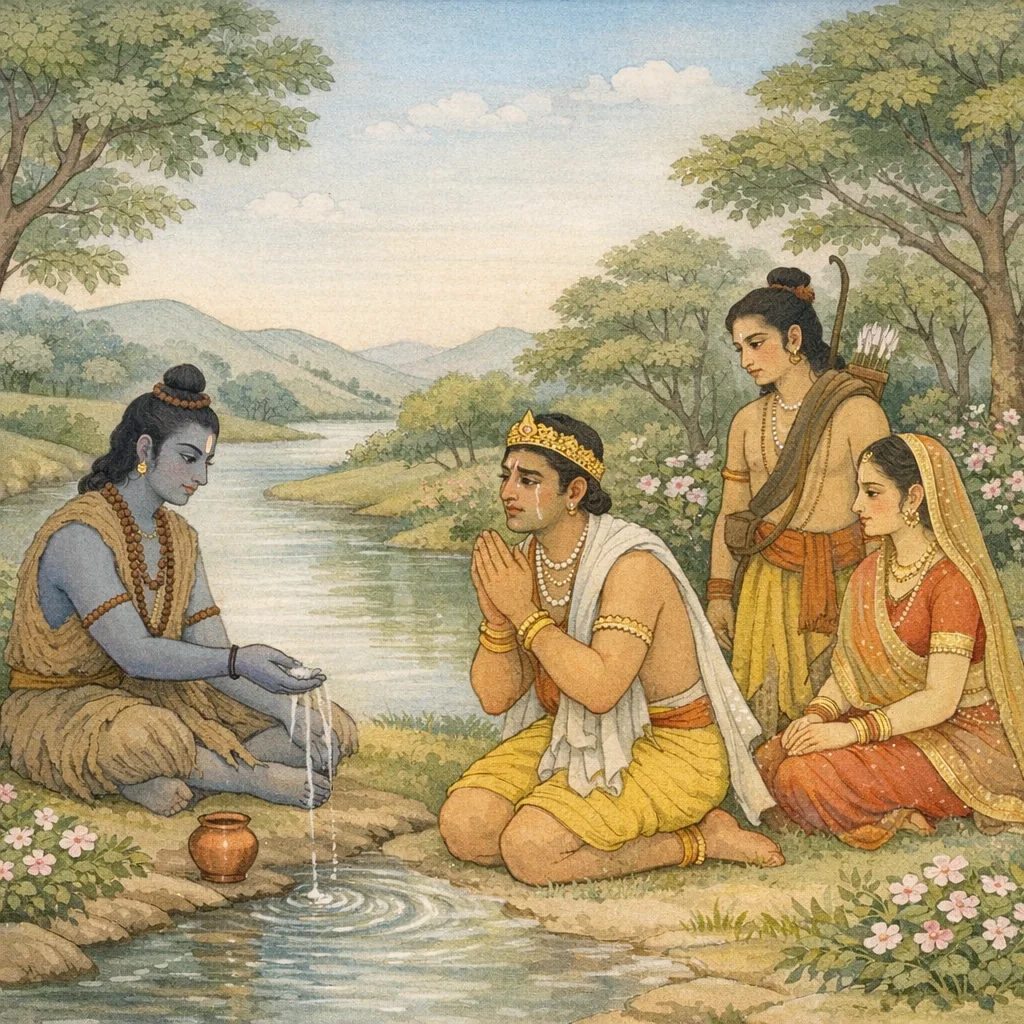
In this sarga, Bharata responds to Rāma’s words with a self-accusation of having fallen from righteousness if he were to accept kingship while the elder brother lives. He cites an ancestral, enduring rule of the Ikṣvāku line: when the eldest son stands, the younger cannot rightly become king. Bharata then urges Rāma to return with him to prosperous Ayodhyā and undergo consecration for the welfare of the dynasty. He articulates a theology of governance: although some regard the king as merely human, Bharata considers the king ‘divine’ insofar as his conduct and statecraft align with dharma and exceed ordinary capacity. The discourse turns to mourning: Bharata reports that while he was in Kekaya and Rāma had departed to the forest, King Daśaratha—sacrificial, revered by the virtuous—ascended to heaven, overwhelmed by grief immediately after Rāma’s departure with Sītā and Lakṣmaṇa. Bharata calls upon Rāma to rise and offer water-libations to their father, noting that offerings made by a beloved son become imperishable in the world of the ancestors. The sarga closes by emphasizing Daśaratha’s final mental fixation on Rāma, portraying death as the culmination of sorrow and longing.
Shlokas
Verse 1
रामस्य वचनं श्रुत्वा भरतः प्रत्युवाच ह।किं मे धर्माद्विहीनस्य राजधर्मः करिष्यति।।2.101.1।।
Hearing Rāma’s words, Bharata replied: “What use are royal duties to me, when I am cut off from dharma?”
Verse 2
शाश्वतोऽयं सदा धर्मः स्थितोऽस्मासु नरर्षभ।ज्येष्ठेे पुत्रे स्थिते राजा न कनीयान् भवेन्नृपः।।2.101.2।।
O best of men, this eternal dharma stands in our line: when the eldest son is present, the younger cannot become king.
Verse 3
स समृद्धां मया सार्धमयोध्यां गच्छ राघव।अभिषेचयचात्मानं कुलस्यास्य भवाय नः।।2.101.3।।
Therefore, O Rāghava, return with me to prosperous Ayodhyā, and have yourself consecrated—so that this lineage, and all of us, may flourish.
Verse 4
राजानं मानुषं प्राहु र्देवत्वे सम्मतो मम।यस्य धर्मार्थसहितं वृत्तमाहुरमानुषम्।।2.101.4।।
People say the king is human; but to me he was divine, for his conduct—aligned with dharma and artha (righteous rule and statecraft)—is spoken of as beyond human measure.
Verse 5
केकयस्थे च मयि तु त्वयि चारण्य माश्रिते। दिवमार्यो गतो राजा यायजूक: सतां मतः।।2.101.5।।
While I was in Kekaya and you had taken refuge in the forest, the noble king—ever devoted to sacrifices and esteemed by the virtuous—departed to heaven.
Verse 6
निष्क्रान्तमात्रे भवति ससीते सहलक्ष्मणे।दुःखशोकाभिभूतस्तु राजा त्रिदिवमभ्यगात्।।2.101.6।।
The moment you had set out—with Sītā and Lakṣmaṇa—the king, overcome by grief and sorrow, went to the heaven of the gods.
Verse 7
उत्तिष्ठ पुरुषव्याघ्र क्रियतामुदकं पितुः।अहं चायं च शत्रुघ्नः पूर्वमेव कृतोदकौ।।2.101.7।।
Rise, tiger among men, and offer the water-libation to our father. I and Śatrughna have already performed that offering.
Verse 8
प्रियेण किल दत्तं हि पितृलोकेषु राघव।अक्षय्यं भवतीत्याहुर्भवांश्चैव पितुः प्रियः।।2.101.8।।
O Rāghava, they say that what is offered by one who is dear becomes imperishable in the world of the ancestors—and you indeed were dear to our father.
Verse 9
त्वामेव शोचंस्तव दर्शनेप्सुस्त्वय्येव सक्तामनिवर्त्य बुद्धिम्।त्वया विहीन स्तव शोकमग्नस्त्वां संस्मरन्नस्तमितः पिता ते।।2.101.9।।
Grieving only for you, longing to see you, unable to turn his mind away from you—your father, bereft of you, drowned in sorrow, passed away while remembering you.
Frequently Asked Questions
The dilemma is succession versus righteousness: Bharata argues that accepting the throne while the eldest (Rāma) lives violates the dynasty’s enduring rule and renders royal duty meaningless for one ‘devoid of dharma.’ His action is a principled refusal of power coupled with an insistence on lawful coronation.
Legitimate governance is measured by conformity to dharma, not by opportunity or coercion. Bharata’s view that the king is ‘divine’ only insofar as conduct and statecraft align with righteousness frames political authority as an ethical vocation accountable to tradition, ritual duty, and public trust.
Ayodhyā is presented as the rightful seat of consecrated rule; Kekaya marks Bharata’s absence during the crisis; the forest signifies exile as a legal-moral condition. Culturally, the sarga highlights udaka offerings and the concept of pitṛloka, stressing that rites performed by a beloved son are considered imperishable.